Wednesday, April 12, 2017

New SHIKARI® S-ATT v2 ELISA kit for detection levels of trastuzumab anti-drug antibodies (ADA) w/confirmation reagent

New SHIKARI® ELISA kit (S-ATT v2) detects levels of trastuzumab anti-drug antibodies (ADA) and contains confirmation reagent to discriminate false from true positives. When used in combination with SHIKARI Q-TRAS, to measure levels of the “free” drug, enables clinicians to follow up their patients confidently and decide on treatment regimen (e.g. dose escalation) 
For product insert please visit 
http://matriksbiotek.com/assets/files/manuals/S-ATTv2.pdf 
For all products and to ask for a quotation
http://www.matriksbiotek.com   info@matriksbiotek.com


Friday, February 17, 2017

New SHIKARI® S-ATB v2 ELISA kit for quantitative measurement of ADA to BEVACIZUMAB with confirmation and a new publication for usefulness of bevacizumab anti drug antibody measurement


Matriks Biotek® to introduce NEW SHIKARI® S-ATB v2 ELISA kit to measure anti-bevacizumab antibody levels and confirmation of the results with in the same kit. Along with measuring trough levels of bevacizumab with SHIKARI® Q-Beva v2 kit together can give definitive information about patient status when evaluated with different tests and clinical status of the patient.


When neutralizing antibodies occur after administration of Bevacizumab these antibodies block the effect of the drug and becomes ineffective during the course of treatment. 
Please refer to the publicatin below. We know from the published work for biological drugs that these antibodies can be transient and be overcomed by escalating the dose of the drug.  http://www.matriksbiotek.com/assets/files/articles/Choi.pdf 

New publication:


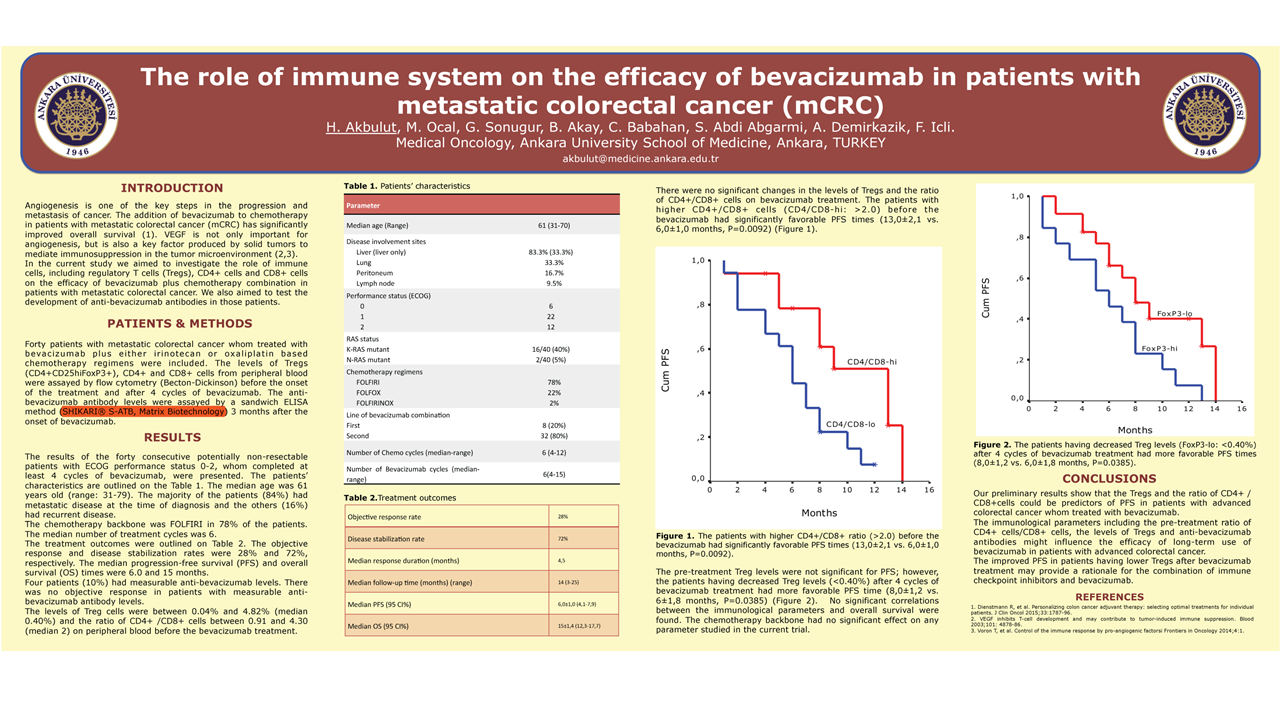
1553P H. Akbulut, M. Ocal, G. Sonugur, B. Akay, C. Babahan, S. Abdi Abgarmi,
A. Demirkazik, F. Icli.: The role of immune system on the efficacy of bevacizumab in patients with metastatic colorectal cancer (mCRC).

Medical Oncology, Ankara University School of Medicine, Ankara, Turkey
Annals of Oncology, Volume 27, 2016 Supplement 6, Abstract Book of the 41st ESMO Congress (ESMO 2016), 7–11 October 2016, Copenhagen, Denmark

According to published work four patients (10%) had measurable anti-bevacizumab levels. There was no objective response in patients with measurable antibevacizumab antibody levels.


For more information about Matriks Biotek SHIKARI ELISA kits for the measurement of drug and anti drug antibody levels please refer to www.matriksbiotek.com and ask a quote from info@matriksbiotek.com 

Friday, February 10, 2017

Matriks Biotek® SHIKARI® ELISA kits Distribution Partners

We are well distibuted all over the world. All ordered kits are delivered worldwide in 1 to 5 business days.
See the list of distributors in your area, 

http://matriksbiotek.com/distribution.html

or send us an email to info@matriksbiotek.com for direct orders


Monday, February 6, 2017

New article from University of Modena and Reggio Emilia, Modena, Italy, Anti-TNF-α Drugs Differently Affect the TNFα-sTNFR System and Monocyte Subsets in Patients with Psoriasis.PLoS ONE, 2016.


      Gibellini L, De Biasi S, Bianchini E, et al. Anti-TNF-α Drugs Differently Affect the TNFα-sTNFR System and Monocyte Subsets in Patients with Psoriasis. Richard Y, ed. PLoS ONE. 11(12), 2016.
     
     Drug and Anti-Drug Levels of Infliximab, Adalimumab and Etanercept are Measured by SHIKARI® ELISA Kits From Matriks Biotek®

The study suggests that a complex remodelling of the TNF-α/sTNFR system occurs in patients with psoriasis treated with anti-TNF-α drugs. Other studies are, however, needed to further characterize functional changes of monocytes in patients treated with different drugs, and that could devote their attention to other early, crucial aspects of inflammatory phenomena modulated by these drugs. Therefore, the correlations between plasma levels of TNF-α, its soluble receptor, the phenotype of monocytes and their ability to produce cytokines must be investigated also in other human diseases that benefit of he treatment with molecules that block TNF-α.


For fulltext article:

List of All Articles

www.matriksbiotek.com 


Tuesday, January 24, 2017

Multicenter Study "Concentrations of Adalimumab and Infliximab in Mothers and Newborns, and Effects on Infection" Drug Levels Measured by SHIKARI® ELISA Kits From Matriks Biotek®


Multicenter Study by University Hospitals from Denmark, Australia and New Zealand.


Concentrations of Adalimumab and Infliximab in Mothers and Newborns, and Effects on Infection

Gastroenterology. Jul;151(1):110-9, 2016

Background & Aims

Little is known about in utero exposure to and postnatal clearance of anti–tumor necrosis factor (anti-TNF) agents in neonates. We investigated the concentrations of adalimumab and infliximab in umbilical cord blood of newborns and rates of clearance after birth, and how these correlated with drug concentrations in mothers at birth and risk of infection during the first year of life.

Methods

We performed a prospective study of 80 pregnant women with inflammatory bowel diseases at tertiary hospitals in Denmark, Australia, and New Zealand from March 2012 through November 2014: 36 received adalimumab and 44 received infliximab; 39 received concomitant thiopurines during pregnancy. Data were collected from medical records on disease activity and treatment before, during, and after pregnancy. Concentrations of anti-TNF agents were measured in blood samples from women at delivery and in umbilical cords, and in infants for every 3 months until the drug was no longer detected.

Results

The time from last exposure to anti-TNF agent during pregnancy correlated inversely with the concentration of the drugs in the umbilical cord (adalimumab: r = -0.64, P = .0003; infliximab: r = -0.77, P < .0001) and in mothers at time of birth (adalimumab, r = -0.80; infliximab, r = -0.80; P < .0001 for both). The median ratio of infant:mother drug concentration at birth was 1.21 for adalimumab (95% confidence interval [CI], 0.94–1.49) and 1.97 for infliximab (95% CI, 1.50–2.43). The mean time to drug clearance in infants was 4.0 months for adalimumab (95% CI, 2.9–5.0) and 7.3 months for infliximab (95% CI, 6.2–8.3; P < .0001). Drugs were not detected in infants after 12 months of age. Bacterial infections developed in 4 infants (5%) and viral infections developed in 16 (20%), all with benign courses. The relative risk for infection was 2.7 in infants whose mothers received the combination of an anti-TNF agent and thiopurine, compared with anti-TNF monotherapy (95% CI, 1.09–6.78; P = .02).

Conclusions

In a prospective study of infants born to mothers who received anti-TNF agents during pregnancy, we detected the drugs until 12 months of age. There was an inverse correlation between the time from last exposure during pregnancy and drug concentration in the umbilical cord. Infliximab was cleared more slowly than adalimumab from the infants. The combination of an anti-TNF agent and thiopurine therapy during pregnancy increased the relative risk for infant infections almost 3-fold compared with anti-TNF monotherapy. Live vaccines therefore should be avoided for up to 1 year unless drug clearance is documented, and pregnant women should be educated on the risks of anti-TNF use.

You can reach the article from following link

http://www.gastrojournal.org/article/S0016-5085(16)30054-3/abstract


Also 39 peer reviewed journal articles done by SHIKARI® ELISA kits from

Thursday, January 19, 2017

SHIKARI® Q-RITUX and S-ATR ELISA Kits for quantitative measurement of rituximab and anti-rituximab antibodies


Rituximab

It is a medication used to treat certain autoimmune diseases and types of cancer. Specifically it is used for non-Hodgkin's lymphoma, chronic lymphocytic leukemia, rheumatoid arthritis, idiopathic thrombocytopenic purpura, and pemphigus vulgaris.


Rituximab destroys both normal and malignant B cells that have CD20 on their surfaces and is therefore used to treat diseases which are characterized by having too many B cells, overactive B cells, or dysfunctional B cells.


SHIKARI® Q-RITUX  ELISA KIT 

ELISA kit for the measurement of rituximab in serum and plasma samples. The kit utilizes double monoclonal antibody technology for capturing and detection of the drug in a sandwich ELISA method with very high specifity. Kit is optimized for covering  Cmax and Cmin values of the drug  and suitable for trough level measurement. All reagents are ready to use and the test is very simple to perform. There is no cross reaction with any other proteins present in naïve human serum. In addition, there is no cross reaction with the other therapeutic immunoglobulins tested (infliximab (Remicade®), etanercept (Enbrel®), adalimumab (Humira®), bevacizumab (Avastin®) and trastuzumab (Herceptin®) )


SHIKARI® S-ATR  ELISA KIT 

It is the only ELISA kit on the market for the quantitative measurement of anti-rituximab antibodies in serum and plasma samples.  All reagents are ready to use and the test is very simple to perform. Kit allows to follow patients ADA levels along with trough levels of the drug and to make decision on dosage and and dosage intervals of the drug. Kit also includes optimized confirmation reagent to eliminate false positive reactions if any.


For more information on all products 

For pricing and any questions send an e-mail to

Tuesday, January 17, 2017

Formation of anti-drug antibodies to biological drugs can be transient, case of infliximab


Measurement of biological drug trough levels and antibody to biological drug gained high importance during the course of treatment. Recently, Matriks Biotek® developed quantitative measurement of anti-drug antibodies for adalimumab (Humira®), infliximab (Remicade®) and its biosimilar  CT-P14 (Remsima®
For further information visit our new website www.matriksbiotek.com 


The blind escalation treatment protocol of the Samsung Medical Center for infliximab


According to article:

“When patients have a poor response to infliximab (IFX) therapy, physicians should measure serum IFX trough levels (TLs) and the presence of antibody to infliximab (ATIs). Patients who have poor responses and subtherapeutic IFX TLs can regain the response after dose intensification. Patients who have ATIs are likely to have no response after dose intensification; however, in our study one patient regained the response after dose intensification and his ATIs disappeared. Thus, ATIs can be transient. Therefore, an individual IFX treatment according to the results of IFX TLs, ATIs, and the clinical response should be considered.”

Reference:
Choi SY, Kang B, Lee JH, Choe YH. Clinical Use of Measuring Trough Levels and Antibodies against Infliximab in Patients with Pediatric Inflammatory Bowel Disease. Gut Liver. Sep 9 2016.

Serum IFX TLs and ATIs were determined with Q-INFLIXI ELISA quantitative analyses  and Q-ATI ELISA quantitative analyses (Matriks Biotek, Ankara, Turkey).


New protocol of the Samsung Medical Center for treating nonresponders (infliximab)


General Scheme for biological drug surveillance


Matriks Biotek® is the first company to produce and commercialize SHIKARI® ELISA kits for for measurement of TLs and ADAs of biological drugs since 2008.
Ask for very competative pricing and custom ELISA development for your biosimilar drug at  info@matriksbiotek.com